
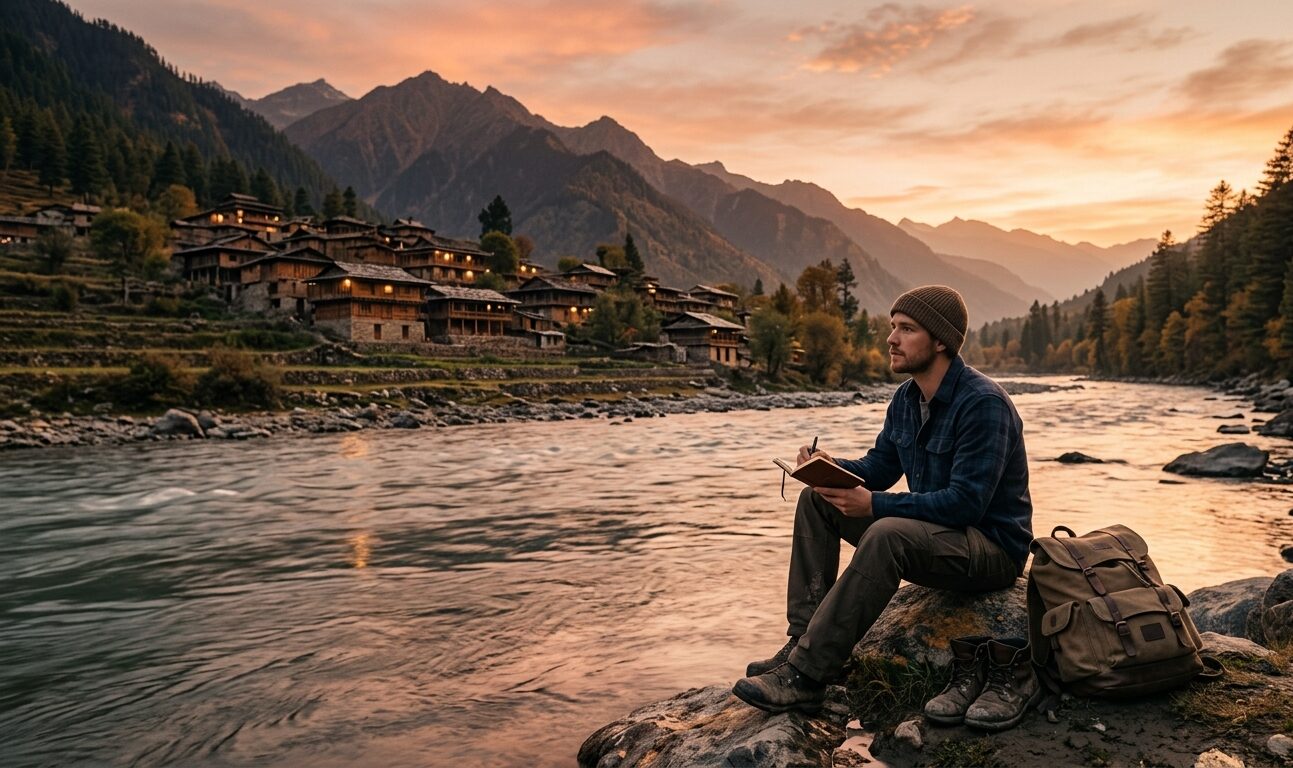
In a quiet village tucked away in the mountains of Nepal, there lived a man named Aarav. He wasn’t famous, wealthy, or particularly educated, but he carried something rare—a deep curiosity about the world beyond his village. While others were content with the familiar rhythm of life, Aarav often sat by the river, watching it flow endlessly, wondering where it went and what lay beyond the horizon.
One evening, after a long day of helping his father in the fields, Aarav made a decision that would change his life forever. Without telling anyone, he packed a small bag with a few clothes, some dried food, and a notebook. At dawn, he left his village, following the river he had always watched.
He had no map, no plan, and no clear destination—just a belief that the world had something to teach him.
The First Border
After days of walking, Aarav reached the border of India. He had never seen so many people in one place. The noise, the colors, the languages—it was overwhelming. For the first time, he felt fear. What if he got lost? What if he couldn’t survive?
But hunger pushed him forward. He found small jobs—cleaning tea stalls, carrying bags at markets, and sometimes just helping strangers in exchange for a meal. Each day, he learned something new—not just about the world, but about people. He realized that kindness existed everywhere, even in the busiest and most chaotic places.
One old shopkeeper in Delhi told him something he would never forget:
“The world is not as big as you think. It becomes small when you meet people.”
Lessons from the Unknown
Months passed, and Aarav continued his journey. He crossed into Pakistan, where he found himself welcomed by a family who treated him like their own. They shared food, stories, and laughter, even though they barely spoke the same language.
From there, he traveled further west, eventually reaching Turkey. The culture was different, the food unfamiliar, and the streets filled with history. He stood in front of ancient mosques and busy bazaars, realizing how small his village had been—and yet, how important it was in shaping who he was.
In each country, Aarav filled his notebook with observations. Not about places, but about emotions—how people loved, struggled, hoped, and survived. He noticed that no matter where he went, people wanted the same basic things: peace, family, and a sense of belonging.
The Turning Point
Years into his journey, Aarav reached the shores of Greece. For the first time, he saw the endless ocean. It reminded him of the river back home—but this time, there was no visible end.
Sitting by the water, he opened his old notebook. The pages were worn, filled with stories, sketches, and reflections. He realized something powerful: he had spent years searching for something outside, but what he had really found was a deeper understanding of life itself.
He no longer felt the urge to keep moving.
The Return
Aarav decided to go back home.
The journey back took months, but this time, it felt different. He was no longer the same boy who had left with curiosity and confusion. He had seen the world, faced struggles, and experienced kindness from strangers.
When he finally reached his village in Nepal, nothing had changed—and yet, everything felt different.
The river still flowed as it always had. The mountains stood tall and silent. His family, who had long thought he was gone forever, welcomed him with tears and disbelief.
That night, sitting by the same river where his journey had begun, Aarav realized the true meaning of his adventure.
The Real Discovery
People often believe that traveling the world is about seeing new places, but Aarav learned that it is actually about seeing the same human emotions in different forms.
He had crossed borders without a map, but along the way, he found something more valuable than direction—he found connection.
He understood that the world is not divided by lines on a map but united by shared experiences. No matter where you go, people laugh, cry, dream, and hope in the same ways.
Final Thoughts
Aarav never became famous. He didn’t write a book or give speeches. But in his village, he became something even more meaningful—a storyteller.
Every evening, children gathered around him to hear tales of distant lands. Not stories of wealth or power, but of kindness, struggle, and humanity.
And whenever someone asked him what he had gained from traveling so far, he simply smiled and said:
“I went looking for the world, but I found people instead.”