
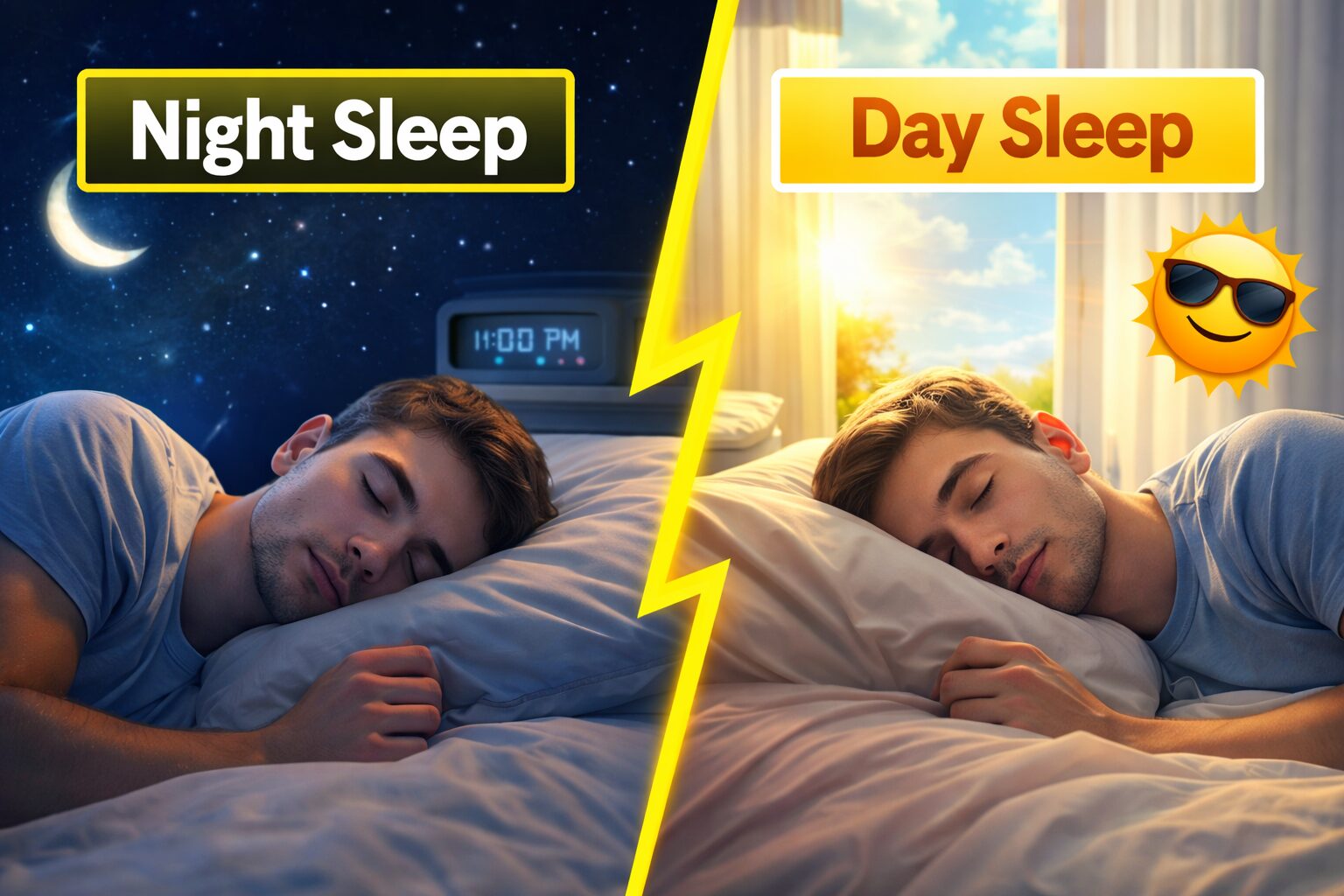
Night sleep heals your body, day sleep only helps you survive — timing is everything.

Sleep is one of the most powerful yet underestimated aspects of human life. While most people focus on how many hours they sleep, very few truly understand that when you sleep is just as important as how long you sleep. The difference between sleeping at night and sleeping during the day goes far beyond comfort — it directly affects your health, mood, productivity, and even your long-term well-being.
Human beings are naturally designed to follow a biological clock, also known as the circadian rhythm. This internal clock is influenced by natural light and darkness. When the sun sets, your body begins to prepare for rest by releasing a hormone called melatonin, which helps you fall asleep. In contrast, sunlight signals your brain to stay alert and active. This simple yet powerful system is what makes night sleep fundamentally different from day sleep.
Sleeping at night is considered the most natural and beneficial form of rest. During nighttime sleep, your body enters deeper sleep cycles, allowing it to repair muscles, strengthen the immune system, and restore energy levels. Your brain also processes memories, emotions, and information gathered throughout the day. This is why people who sleep well at night often wake up feeling refreshed, focused, and mentally clear.
On the other hand, sleeping during the day does not provide the same level of recovery. Even if you manage to sleep for the same number of hours, your body struggles to reach deep sleep stages because it is not aligned with your natural rhythm. Light exposure, noise, and daily activities around you also make it harder to maintain uninterrupted sleep. As a result, day sleep often feels lighter, less satisfying, and less effective.
One of the biggest differences between night sleep and day sleep is hormonal balance. At night, melatonin levels rise, promoting deep and restful sleep. During the day, cortisol levels are naturally higher to keep you alert. Trying to sleep during the day goes against this natural hormone cycle, making it more difficult to fall asleep and stay asleep. Over time, this imbalance can lead to fatigue, stress, and even serious health issues.
People who regularly sleep during the day, such as night shift workers, often face unique challenges. They may experience constant tiredness, difficulty concentrating, and mood swings. Studies have also linked irregular sleep patterns to increased risks of heart disease, obesity, and weakened immunity. This does not mean that day sleep is useless, but it does highlight that it is not a perfect substitute for night sleep.
However, day sleep does have its place. Short naps during the day can be incredibly beneficial if used correctly. A nap of 20 to 30 minutes can boost energy, improve focus, and enhance mood without interfering with nighttime sleep. In fact, many successful individuals use power naps as a tool to stay productive throughout the day. The key is to keep naps short and not rely on them as a replacement for proper night sleep.
Another important aspect to consider is mental health. Night sleep plays a crucial role in emotional stability. When you sleep properly at night, your brain processes emotions in a balanced way, helping you handle stress and challenges more effectively. Lack of quality night sleep, or relying heavily on day sleep, can lead to irritability, anxiety, and even depression over time.
Productivity is also deeply connected to your sleep timing. People who maintain a healthy night sleep routine tend to perform better in their daily tasks. They have better concentration, quicker decision-making abilities, and higher overall energy levels. In contrast, those who rely on irregular sleep patterns often struggle to stay consistent, feeling drained even after long hours of rest.
That being said, modern life sometimes makes it difficult to follow a perfect sleep schedule. Work demands, social habits, and technology have all contributed to disrupted sleep patterns. Many people stay awake late into the night using their phones or watching content, only to compensate with sleep during the day. While this may seem manageable in the short term, it can gradually take a toll on both physical and mental health.
If improving your sleep is your goal, small changes can make a big difference. Try to maintain a consistent sleep schedule by going to bed and waking up at the same time every day. Reduce screen exposure before bedtime, as blue light can interfere with melatonin production. Create a calm and dark sleeping environment to support deeper rest. Even these simple habits can significantly improve the quality of your night sleep.
In conclusion, while both night sleep and day sleep serve the purpose of rest, they are not equal in their effects. Night sleep aligns with your body’s natural rhythm, providing deeper recovery and long-term health benefits. Day sleep, although helpful in certain situations, cannot fully replace the advantages of sleeping at night. Understanding this difference can help you make better lifestyle choices and prioritize your well-being.
At the end of the day, sleep is not just about closing your eyes — it is about giving your body the right conditions to heal, recharge, and thrive. And more often than not, the best time for that is during the quiet, peaceful hours of the night.